

Offshore Software Development: Complete Guide
Offshore software development can be one of the fastest ways to scale engineering capacity without locking yourself into local hiring constraints but only if you run it like a product and not like a cheap vendor. The winners treat offshore as a delivery system: clear requirements, measurable outcomes, strong security/IP controls, and a collaboration cadence that survives time zones.
In this guide, you’ll learn what offshore software development is (and what it isn’t), how it compares to nearshore and onshore teams, what offshore development centers (ODCs) are used for, and what realistic costs look like in 2026. We’ll also cover the most common failure modes communication drift, quality inconsistency, and hidden management overhead and give you a practical governance playbook you can apply immediately.
If you’re evaluating offshore software development services, choosing between offshore software development companies, or planning to build a long-term offshore software development team, this is your end-to-end blueprint.
Get Started Learn MoreWhat Is Offshore Software Development? (offshoring meaning)
Offshoring means moving a business activity to another country. In software, offshore software development typically means building or extending your engineering capability using a team located in a different country often far from your headquarters to access talent and cost advantages.
A key nuance: offshore development is often longer-term and team-based (for example, a dedicated squad or an offshore development center), not just hire a freelancer to ship a feature. Many companies offshore to:
- Fill skill gaps (cloud, mobile, data engineering, AI)
- Add capacity to reduce backlogs
- Extend delivery coverage (follow-the-sun development)
- Create a scalable “second hub” for engineering
Offshore software development is also frequently confused with outsourcing. Outsourcing is a broader umbrella (you can outsource locally). Offshoring is defined by geography.
If you’re also comparing collaboration models, you may like our guide on nearshore software development for teams that want tighter time-zone overlap.
Authoritative context
Wikipedia’s definition-style overview is a useful baseline for terminology, but it doesn’t cover execution details or governance in depth: https://en.wikipedia.org/wiki/Offshore_custom_software_development
Offshore vs Onshore vs Nearshore Software Development
The right model depends on what you’re optimizing for: cost, speed, control, time-zone overlap, or long-term capability building.
Here’s a practical comparison:
| Model | Where the team is | Best for | Typical trade-offs |
|---|---|---|---|
| Onshore | Same country | High-collaboration work, regulated environments, tight feedback loops | Highest cost, slower scaling, limited talent pool |
| Nearshore | Nearby countries / similar time zones | Teams that need daily collaboration with fewer time-zone issues | Cost savings smaller than offshore; talent pool varies |
| Offshore | Distant countries | Cost efficiency, access to large talent markets, scalable delivery hubs | Needs strong process, documentation, and governance |
Decision shortcuts
- Choose onshore when domain complexity is high and discovery is ongoing (frequent pivots, ambiguous requirements).
- Choose nearshore when you need almost local collaboration but can’t hire locally fast enough.
- Choose offshore when you can define outcomes clearly and want scalable execution (or want an ODC as a second engineering hub).
To avoid the common “we saved on rates but lost on rework” trap, the rest of this guide focuses on how to make offshore predictable.
Why Choose Offshore Software Development? (Benefits)
The business case usually starts with cost but sustainable offshore success is about leverage, not just savings.
- Access a global talent pool to fill skill gaps where local hiring is saturated (cloud, mobile, AI).
- Improve cost efficiency and reinvest savings into QA, security, and automation.
- Parallelize delivery across time zones for faster cycle times.
- Scale without permanent payroll burden spin teams up/down as needs change.
- Free core teams to focus on strategy, customers, and product-market fit.
If you’re designing a partnership model (not just “hire developers”), our software co-development partner guide can help you structure responsibilities and success metrics.
Engagement Models: Dedicated Team, Staff Augmentation, Offshore Development Center (ODC), BOT
Offshore delivery succeeds or fails based on matching the engagement model to your operating reality.
Dedicated team
A stable squad (for example, PM/BA + devs + QA + DevOps) working as an extension of your org.
- Best for: ongoing product development, multi-quarter roadmaps
- Risk: becomes black box if you don’t own outcomes and architecture decisions
Staff augmentation
You add offshore engineers to your existing team, using your tools and processes.
- Best for: quickly filling skill gaps (React, Python, QA automation)
- Risk: onboarding overhead is on you; weak documentation hurts
Offshore Development Center (ODC)
An ODC is a long-term offshore hub (often multiple teams) designed to support sustained delivery.
- Best for: companies that want a second engineering location
- What makes it work: standardization (tooling, security, hiring bar, career ladders, governance)
BOT (Build-Operate-Transfer)
A partner builds and runs the team, then transfers it to you later.
- Best for: companies that want eventual ownership but need a faster start
- Risk: unclear transfer terms (IP, contracts, leadership continuity)
Rule of thumb
If you’re building something core to your business, choose a model that keeps you in control of product thinking and technical direction even if execution is offshore.
Offshore Software Development Rates by Country (and what actually drives cost)
Searches like “offshore software development rates by country” imply a simple answer there isn’t one. Country averages exist, but your price depends on:
- Seniority mix (mid vs senior heavy teams)
- Domain specialization (FinTech, healthcare compliance, real-time systems)
- Delivery maturity (QA automation, CI/CD, security practices)
- Communication overhead (time-zone overlap, English proficiency)
- Governance and documentation discipline
A practical “true cost” checklist
- Product/Project management (often 10-15% of delivery cost)
- QA and test automation (commonly 20-30% depending on risk profile)
- Tooling (Jira/Linear, Slack, CI/CD, test tooling, MDM)
- Security and compliance (access control, audits, legal review, SOC 2/ISO readiness)
- Rework contingency (misaligned requirements, integration surprises)
If a vendor quote looks dramatically cheaper than others, ask: Which of the above did they exclude or plan to underinvest in?
Quick planning benchmark (useful for founders)
Instead of debating hourly rates first, start with:
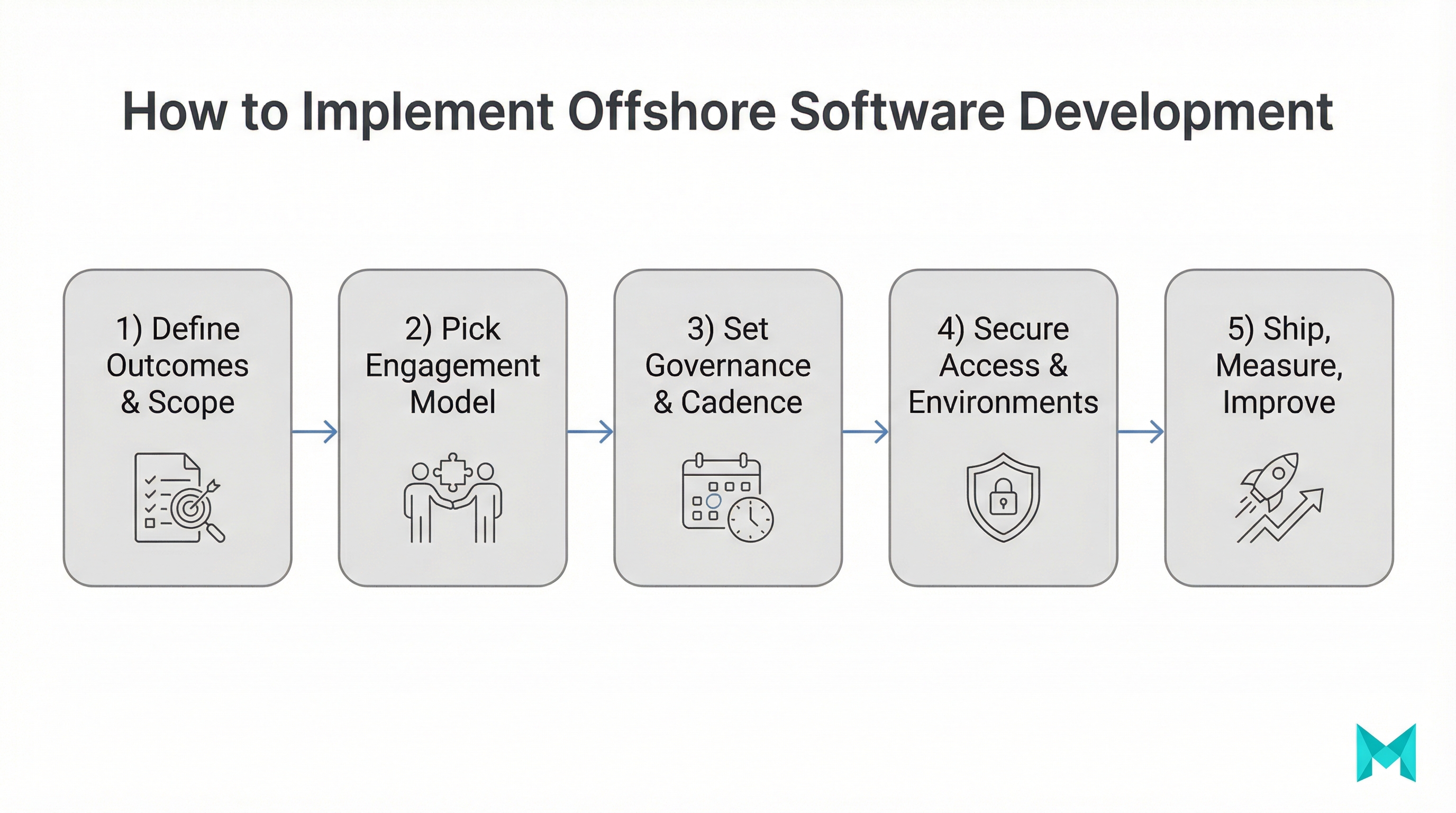
- Define outcomes (scope + acceptance criteria)
- Estimate team shape (roles + seniority)
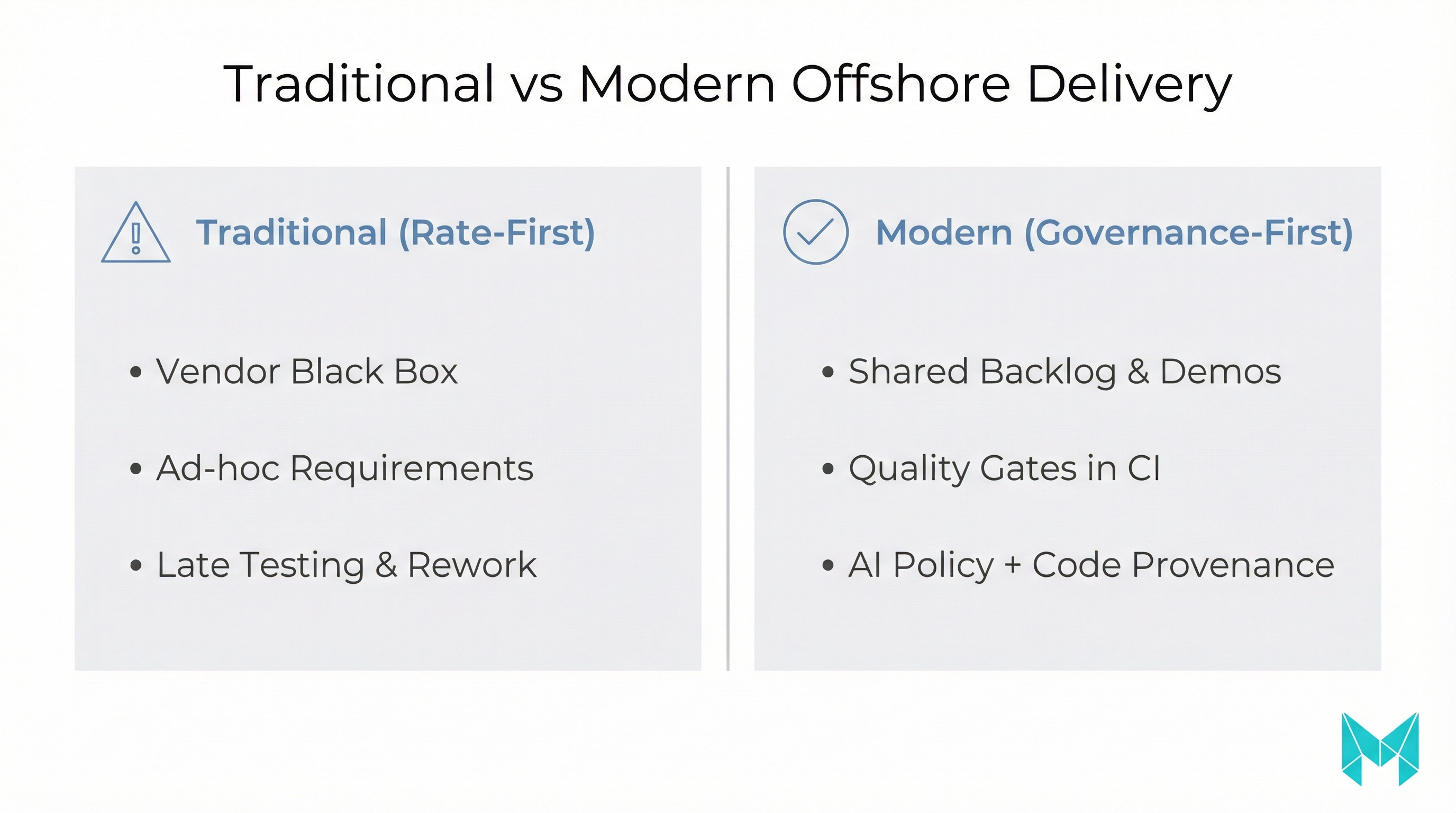
- Agree on quality gates (tests, code review, security checks)
- Only then compare vendors
Risks & Challenges (and How to Mitigate Them)
Offshore “fails” are usually not about talent they’re about system design: unclear requirements, weak feedback loops, and missing governance.
Communication drift (requirements lost in translation)
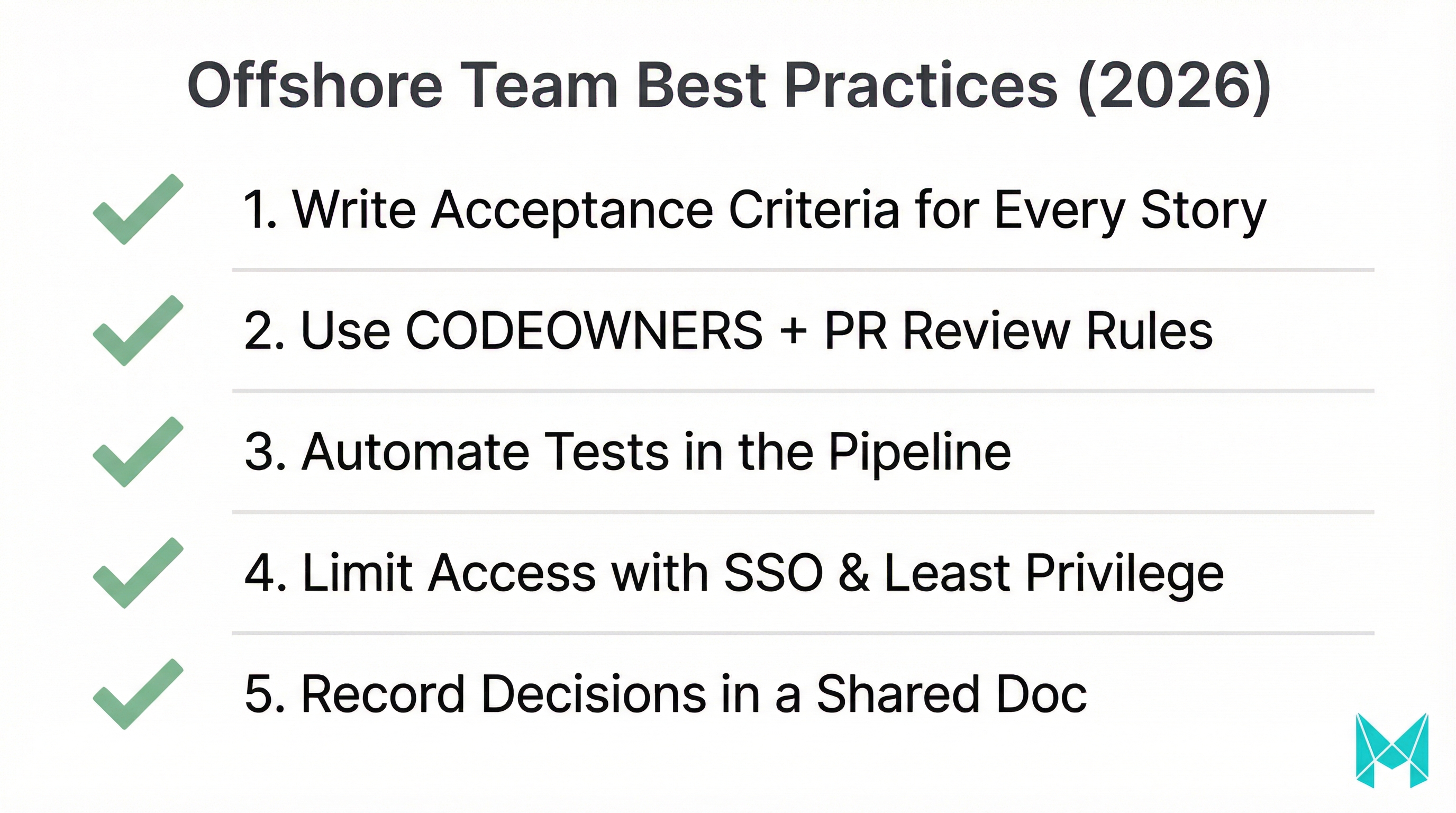
- Write a PRD with user stories + acceptance criteria (non-negotiable)
- Run weekly demos + backlog grooming
- Default to written decisions (docs > meetings)
Time zone friction
- Define overlap hours (even 2 hours/day helps)
- Design for async: Loom videos, PR descriptions, decision logs
- Rotate meeting times to avoid “always painful for one side”
Quality inconsistency
- “Definition of Done” that includes tests + review + security checks
- Enforce PR review standards and linting/static analysis
- Build QA automation early (don’t postpone)
Security and IP risk
- NDAs + clear IP assignment clauses in MSAs/SOWs
- Least-privilege access (SSO, role-based permissions, audited secrets)
- Segmented environments + restricted production access
Vendor lock-in
- Your repos, your CI/CD, your cloud accounts (where possible)
- Documentation + runbooks as deliverables
- A transition plan from day one (yes, even for “long-term” relationships)
For teams outsourcing design or broader delivery functions, you might also reference how to outsource web design effectively many governance principles overlap (briefs, review cycles, and acceptance criteria).
The 2026 Offshore Governance Playbook (Templates You Can Copy)
Most guides tell you to “communicate more.” Here’s what actually reduces risk in 2026: make offshore measurable and auditable.
1) Define SLAs and KPIs (outcomes, not hours)
Pick a small set of metrics that reflect delivery health:
- Lead time for changes (idea -> production)
- Deployment frequency
- Change failure rate and MTTR
- Sprint predictability (planned vs delivered)
- Defect leakage (prod bugs vs pre-prod)
(These align with widely used DevOps performance concepts; see DORA research context: https://dora.dev/)
2) Use a simple RACI
Clarify who is Responsible, Accountable, Consulted, Informed for:
- Architecture decisions
- Security approvals
- Release ownership
- Incident response
- Vendor staffing changes
A surprising number of offshore breakdowns happen because “everyone assumed someone else owned it.”
3) Establish an escalation path before you need it
Write down:
- Severity definitions (S1-S4)
- Response times
- Escalation contacts
- What “pause feature work to fix quality” looks like in practice
4) Create an AI/LLM policy (this is the new gap)
In 2026, offshore teams will use AI coding assistants. You don’t stop this you govern it.
Minimum viable AI policy:
- No customer PII or secrets pasted into public LLMs
- Approved tools + approved modes (enterprise tier, no training on your data)
- Require AI usage notes in PRs for sensitive modules
- Maintain a “code provenance” approach for critical components (who wrote/approved it)
- Decide where AI can be used: tests, refactors, documentation are often safer first steps
5) Bake in an exit plan (friendly or not)
Include as part of your operating model:
- Documentation and runbooks as deliverables
- Handover sessions recorded
- A transition support window (for example, 30-60 days)
- Clear ownership of repos, infra, and third-party accounts
Use Cases & Practical Examples
Here are common scenarios where offshore software development services tend to work well assuming the governance fundamentals above.
MVP build with a tight runway
- Offshore squad builds the product in defined milestones
- Onshore stakeholders own discovery, prioritization, and fast feedback
- Best practice: ship a thin vertical slice early to validate assumptions
If you’re in this phase, consider a structured approach like our MVP development services where scope control and release cadence are built into the process.
Modernization or rebuild of a legacy system
- Offshore team can handle migration workstreams (API refactors, UI rewrite, test harness)
- Best practice: strangler pattern + incremental releases instead of “big bang”
Dedicated QA automation + performance hardening
Many product teams underinvest in QA automation. Offshore teams can add major leverage here:
- Regression suite automation
- Load testing
- CI/CD quality gates
Building an Offshore Development Center (ODC) as a second hub
This is where “offshore development center” becomes more than a keyword:
- Hiring pipeline + consistent bar
- Standard tooling and security
- Career growth for retention
- Multi-team delivery management
Tools & Platforms That Make Offshore Work
A reliable offshore setup is usually a stack, not a single tool:
- Planning: Jira / Linear (clear ownership + backlog hygiene)
- Docs: Confluence / Notion (decision logs + runbooks)
- Code: GitHub / GitLab (branch protections + CODEOWNERS)
- CI/CD: GitHub Actions / GitLab CI / Jenkins (automated checks)
- Quality: SonarQube, SAST, dependency scanning
- Observability: Sentry, Datadog, Grafana/Prometheus
- Security access: SSO, password manager, audited secrets vault
Suggested visuals (filenames + prompts) for your media pipeline:
- offshore-software-development-hero.png Alt: “Offshore software development distributed team” Prompt: “distributed team world map secure collaboration”
- offshore-vs-nearshore-vs-onshore.png Alt: “Offshore vs nearshore vs onshore comparison” Prompt: “comparison infographic with cost/timezone/talent icons”
- offshore-governance-playbook.png Alt: “Offshore delivery governance playbook” Prompt: “workflow diagram with KPIs, RACI, security gates, AI policy”
Frequently Asked Questions (FAQs)
An offshore software development company provides software engineering services using teams located in a different country than the client. In practice, they may deliver dedicated teams, staff augmentation, or an offshore development center (ODC) model depending on your needs.
How Musketeers Tech Can Help
Musketeers Tech helps teams get the benefits of offshore software development without the usual risk. We don’t treat offshore as throw work over the wall we build delivery systems: clear scope, measurable outcomes, and a governance layer that keeps quality and timelines predictable.
If you need to ship a product fast, we can assemble a delivery pod for web/mobile builds through our Web Application Development practice, or design a structured launch plan via MVP Development Services. For founders who need senior oversight (architecture, hiring bar, roadmap realism, vendor governance), our CTO as a Service provides the operating discipline that offshore engagements often lack.
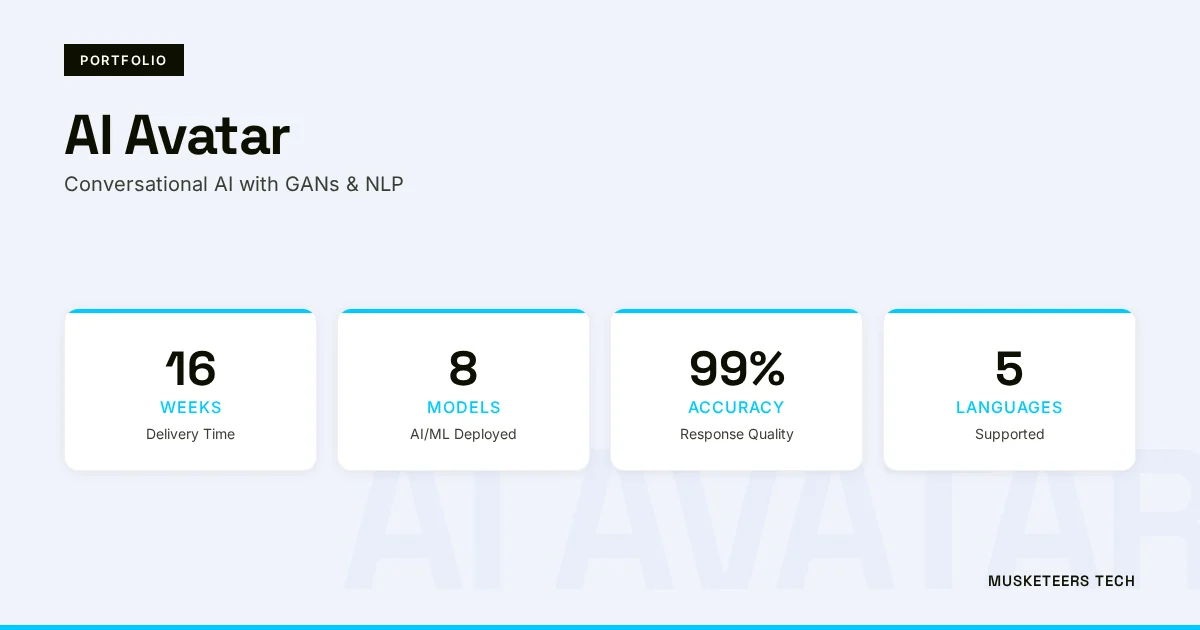
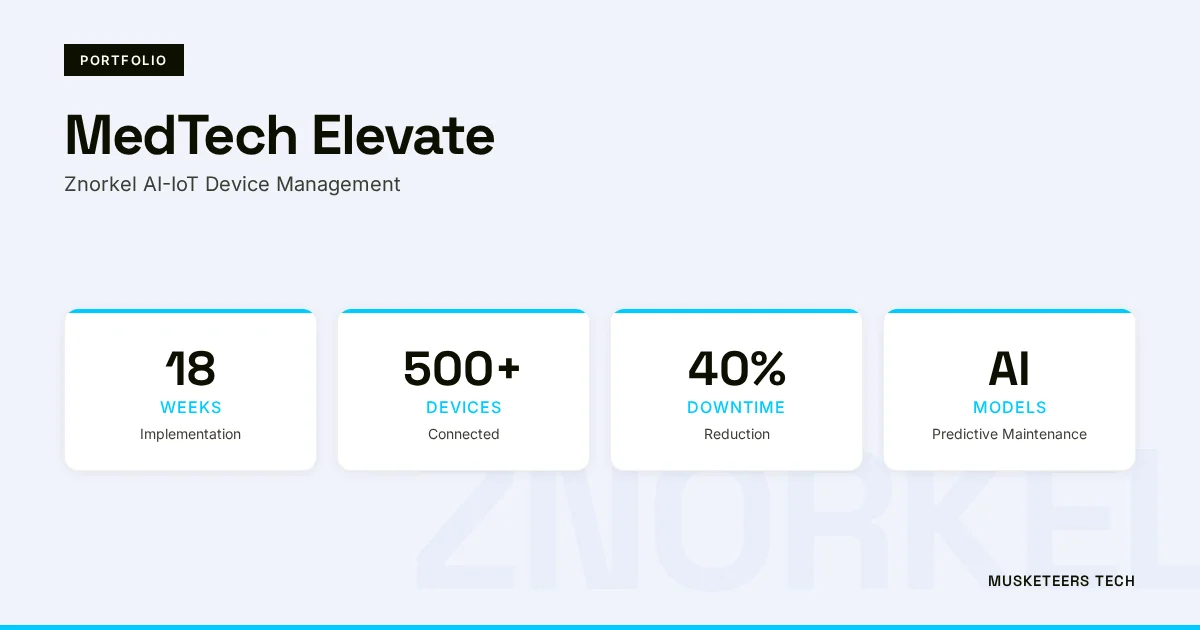
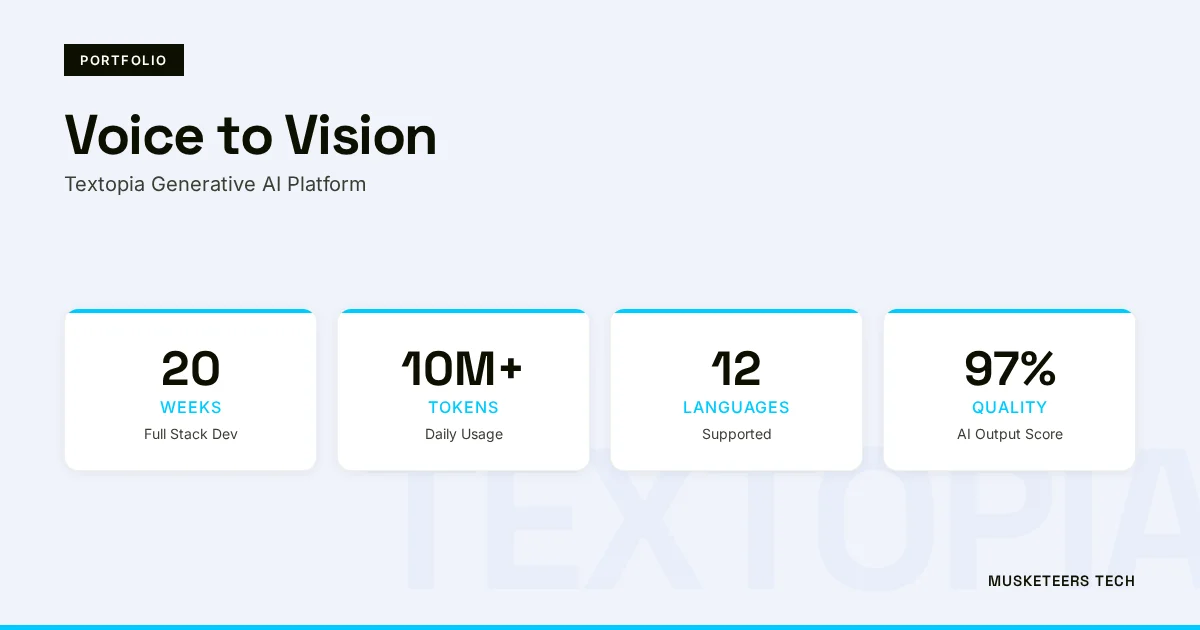
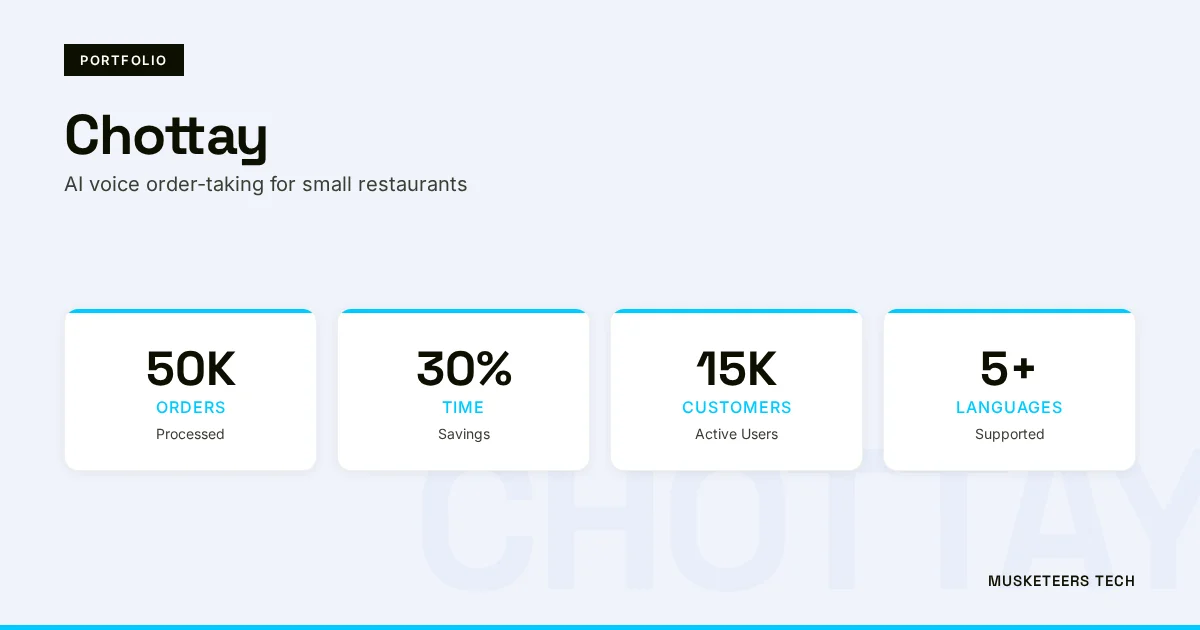
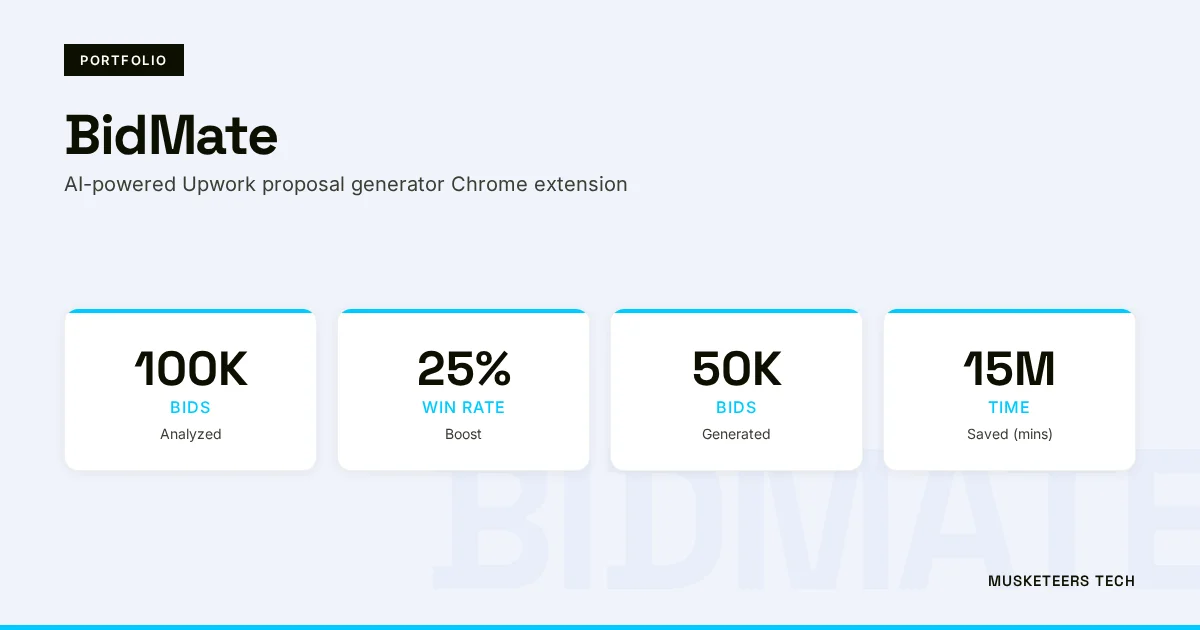
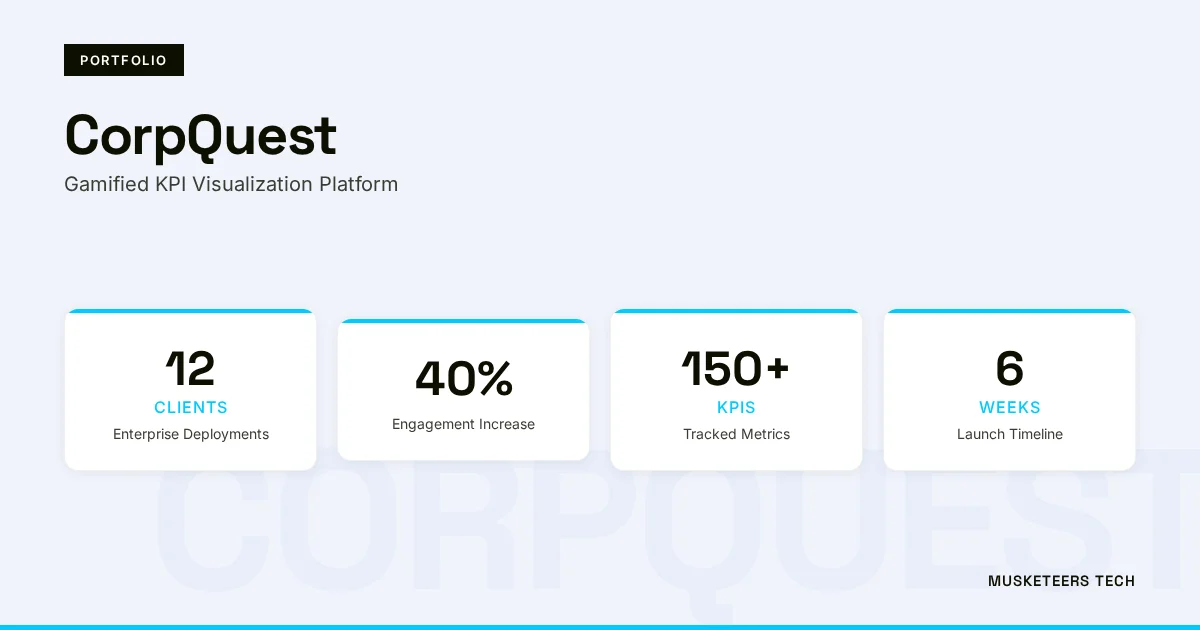
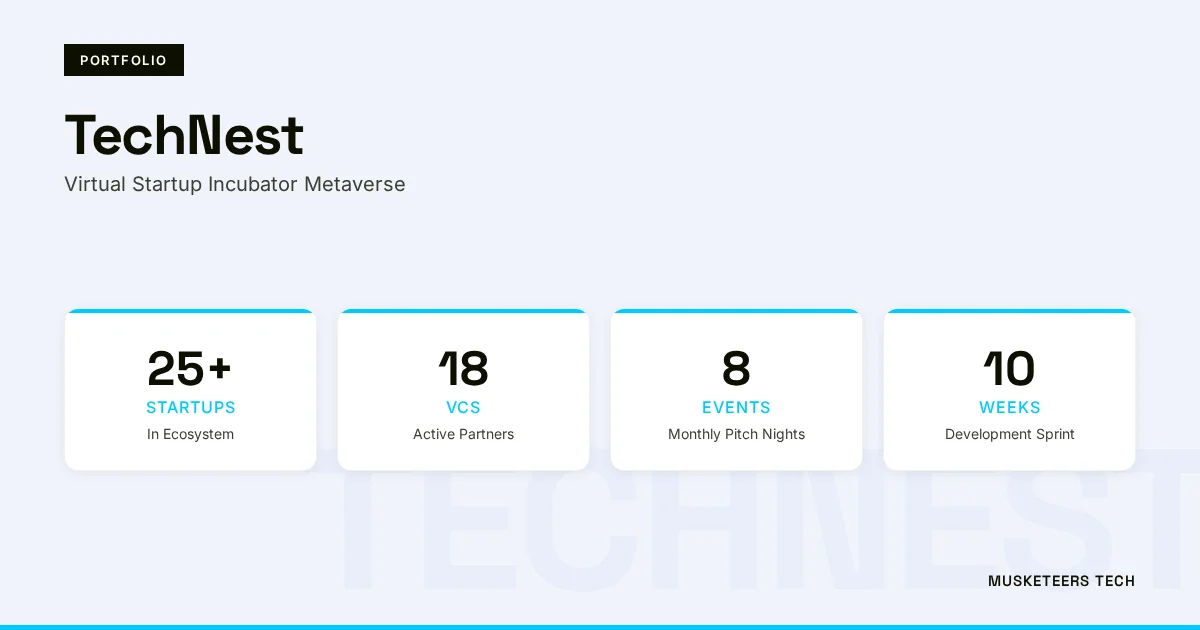
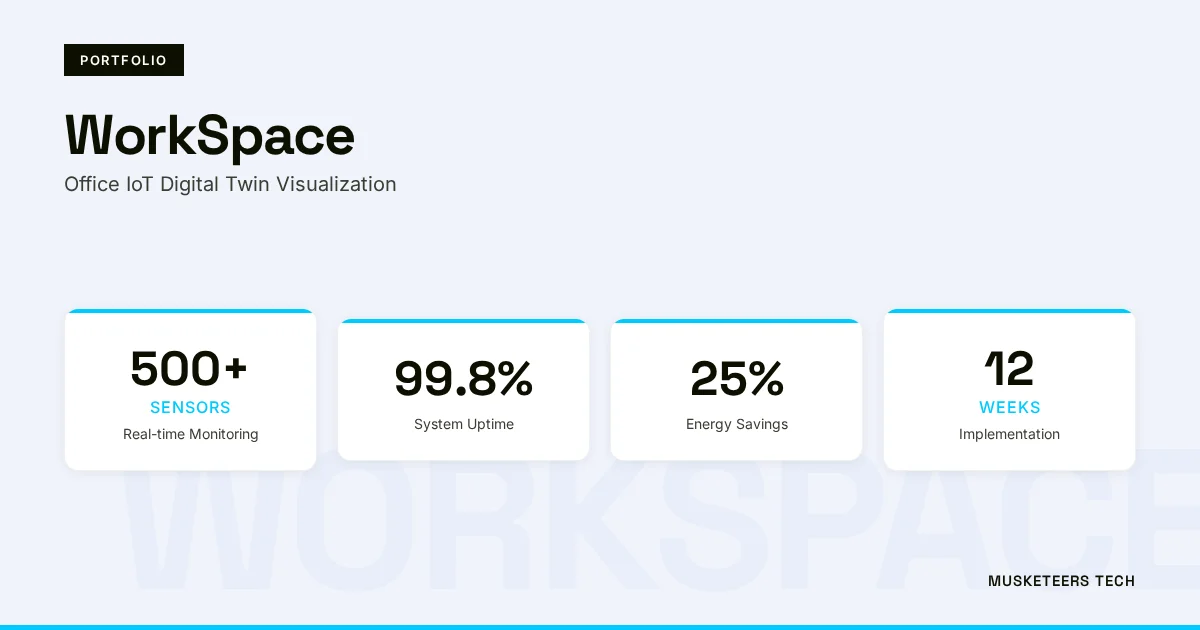
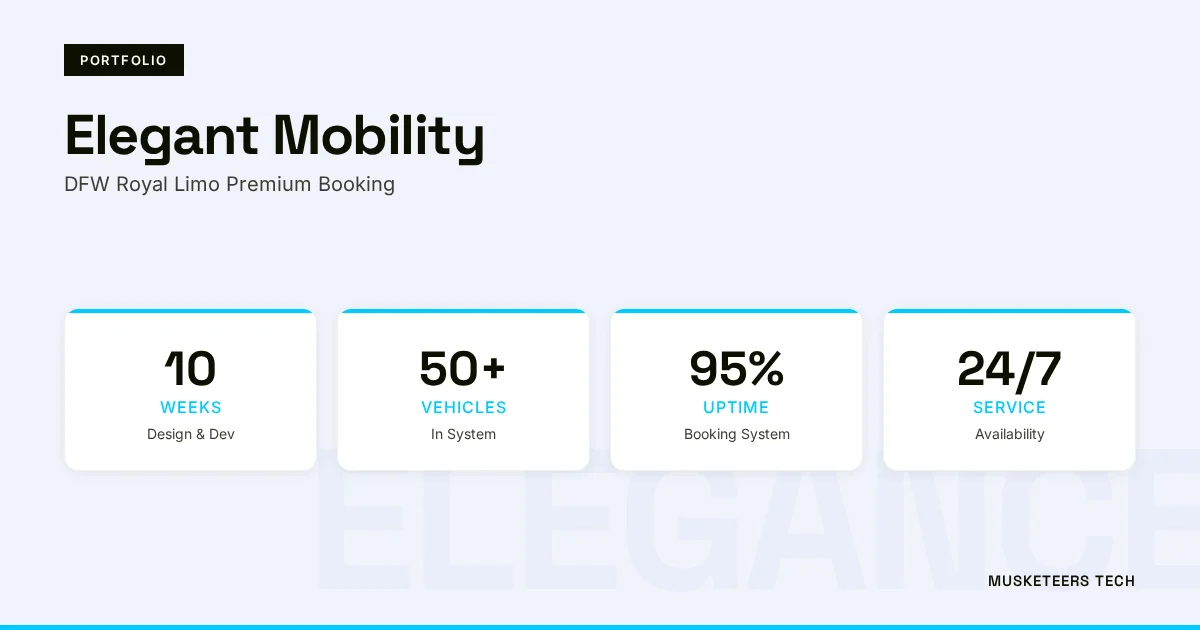
We’ve delivered complex product experiences across AI and immersive tech as well see examples like our portfolio, including projects such as BidMate (AI assistant) and Doctordost (appointments + operations). Whether you’re building an ODC, extending your team, or outsourcing a defined project, we’ll help you set the right engagement model, security posture, and delivery cadence from day one.
Talk to an Expert View PortfolioWeb Application Development
Ship secure, scalable web products with a predictable cadence.
CTO as a Service
Executive-level oversight for architecture, hiring, and vendor governance.
Final Thoughts
Offshore software development is not a shortcut it’s a strategy. When you treat it as a real engineering operating model (with governance, security, and measurable delivery), it can unlock faster shipping, access to specialized talent, and sustainable cost leverage.
If you remember only a few things, make them these: choose the right engagement model, define outcomes with acceptance criteria, enforce quality gates, and establish governance early (KPIs, RACI, escalation). In 2026, add one more: create an AI/LLM policy so your team can use modern tooling safely without risking IP or customer data.
Need help turning offshore into a predictable delivery engine? Check out our CTO as a Service or explore our recent projects.
Last updated: 04 Feb, 2026
